Tripped up


So let’s say your client is a sponsor of a local professional sports team, the one that just won a championship. Let’s call them the Vapids. And let’s say that your client and the Vapids entered a multi-year agreement just a year ago. The agreement was based on the understanding that your client was the official “marketing partner” in their category. That’s when the Vapids used words like “partner” and “partnership” and “long-term relationship.”

Then they won a championship and the team replaced its marketing department with a new group of slick talking suits. That’s when things changed. Instead of “partnership,” the slick talking suits began using words like “it’s just business” to explain that they went behind your back to a competitor and signed the competitor to a bigger deal without having the courtesy to let you know about it first.

The ethical approach would have been to call you and say, “We’ve been approached by one of your competitors, how do you feel about that?” Instead, they informed you after the fact in an email because they didn’t have the decency to discuss it with you face to face.

Now I am far from naïve. I’ve worked for professional sports teams. I know that the business of sports is not always ethical. But the lack of ethics demonstrated by the Vapids was so galling because the foundation of my client’s business is based on one simple value: integrity. It is the essence of their brand and the strength of their relationships. It may sound old fashioned, but things like your word and your handshake are still important to my client. They understand that empty promises are bad for business and that trust is as important as profits.

Slick sales talk may impress some people, but it takes substance and character to sustain a strong reputation. Once people look behind the curtain you better have something they can count on. Otherwise you are just a fake wizard in a nice suit, as worthless and phony as a ponzi scheme.    


Bookmark and Share

Red Rubber Ball


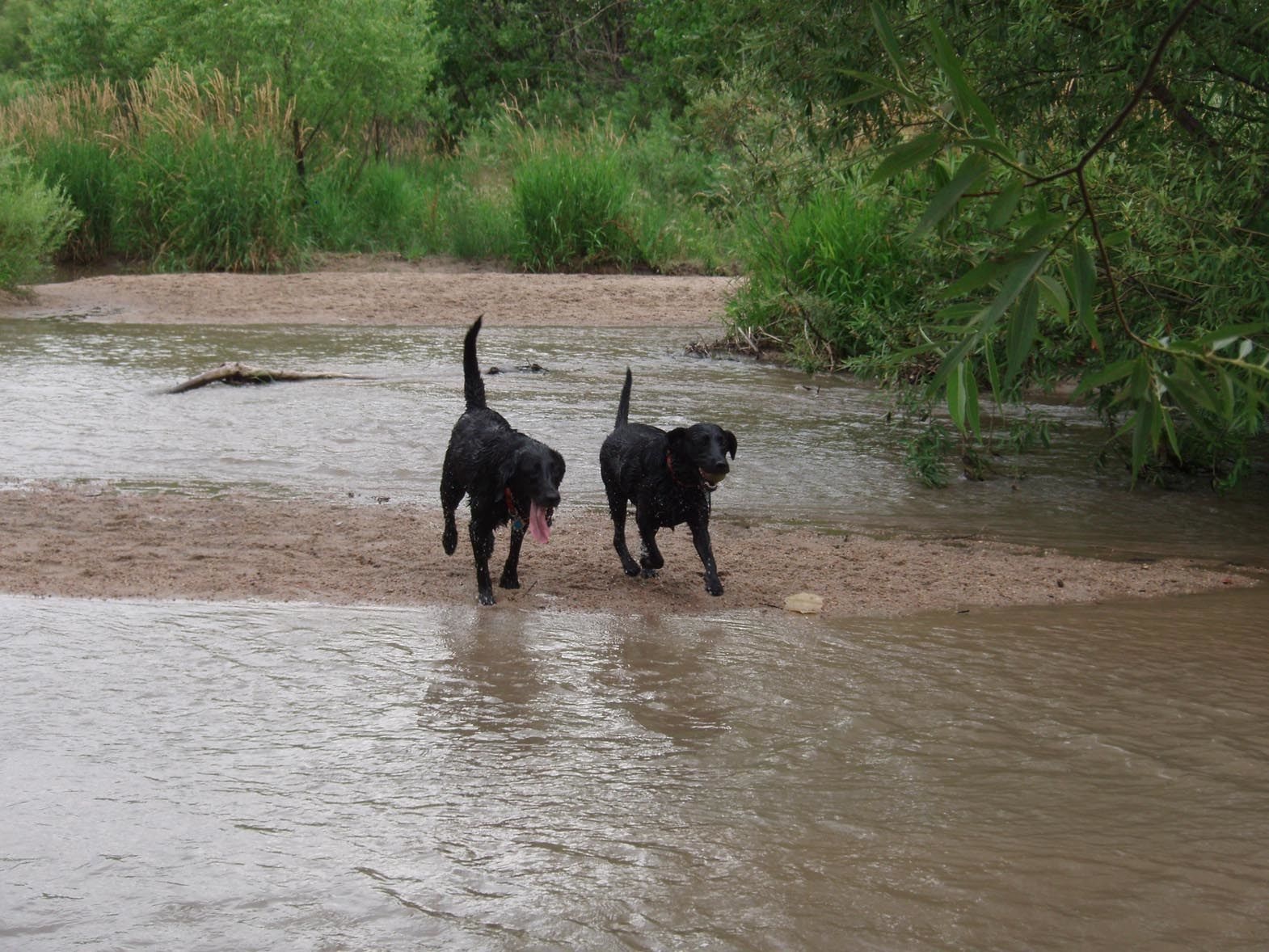
I got my dogs a red rubber ball. It glows in the dark so we can play at night. My dogs are Labs, and they love to retrieve. They think this ball is the best thing ever. They are really focused and they know what they want. It doesn’t take much to make them happy.

 
Watching them play is the best example I know of something that is straight, honest and true.  It’s pure joy. You don’t need to wonder about their motive, or if they are trying to sell you a bill of goods you don’t really need.

I thought about this after a rather unpleasant experience with a high profile Denver plumbing company. This company prides itself on customer service and goes above and beyond what other companies might do in that area. They email you nice profiles about their “master plumbers” and they are courteous and professional when they show up.

The problems started when they began to put the pressure on (no pun intended) to convince me to do a very expensive repair I didn’t think we needed. They implied, if not threatened, that if we didn’t do this in the next few days we’d be swimming in sewage. Not a pretty picture. So sign here and pay up or else.  

As I said, this company wants to be perceived as a reputable business. But ethics are more than just courtesy and a nice website. You can’t just say you are ethical. You actually have to live it and believe it and deliver it. I understand the sales process, but you can’t turn a new customer into a loyal customer by literally scaring the crap out of them.

Turns out things have been just fine since I decided to get a few other opinions. It wasn’t quite as urgent as it sounded. So I will never call that company again or refer them to anyone else.

Business ethics are simple. It’s not complicated. There is a right way and a wrong way to treat people and you just need to decide which way you want to go. Then you need to base your business decisions on that ethical direction. Your reputation will follow.

My dogs are not confused about ethics. They know what is right and what they want. They know what is pure and they can smell a phony line of crap a mile away. We can all learn a valuable lesson from watching them play. We all have to choose what sort of reputation we want. As Dylan said, we need to know our song well before we start singing.   


Bookmark and Share

One man’s ceiling


As Paul Simon sang, one man’s ceiling is another man’s floor. In other words, people look at things differently depending on their perspective.


That’s obvious in politics, where a positive term like investment becomes something negative to someone else. Or where an end of life conversation with your doctor becomes a death panel and educating people about a serious problem like childhood obesity becomes something sinister.

This failure to communicate also happens in relationships. Men are from Mars and women are from Venus, right? The fact is, if you don’t trust someone you are going to be skeptical about their motives. Which brings me to my point.

A friend who works for another PR firm was telling me about a frustrating client that consistently challenged him. The client questioned everything my friend did, demanded constant changes and revisions, and made simple projects difficult because the client was certain that my friend didn’t know what he was doing and that the client could do it better. There are two things happening here that make this relationship complicated. One is that this is a typical example of a high maintenance client. Like in When Harry Met Sally, the worst kind of high maintenance client is one that doesn’t know it is high maintenance. The other thing happening here is a serious lack of trust.

The client hired you because of your expertise but now doubts your judgment. Is this an insecure client or are you not working hard enough to earn their trust? Are you not meeting the client’s expectations or are the client’s expectations not realistic? Perhaps it is a little of both, but is this a problem that can be solved? And are you willing to put in the effort to make it possible?

Effective communication takes patience and trust. Both sides need to be willing to see things from the other’s perspective. Both need to acknowledge that there is a problem and agree to work together to find a solution. Both need to be open to compromise.

Reasonable people can make reasonable decisions when there is a good reason. For my friend, the reason has to start with the fact that this is an important client that the firm wants to keep. For the client, it needs to start with remembering why it hired the PR firm in the first place, because it had the talent, experience and track record to help the client succeed.    

It may be that the firm and the client would be better off parting ways. Some things just are not meant to be. But if the relationship is important enough they will take the necessary steps to cross the bridge dividing them and meet each other half way.

Are you willing to look at things differently, or is the effort not worth the trouble? One man’s ceiling is another man’s floor. Or as Dylan said, I’ll let you be in my dream if I can be in yours. 


Bookmark and Share

As Leigh Rubin, the artist behind Rubes Cartoons expressed in a humorous cartoon revision of Newton’s Law,  “What goes up must come down, except for health insurance premiums.”

That essential law of gravity is very apparent during a crisis. Just ask the owners of the New York Mets, who are facing a $1 billion lawsuit that claims they illegally profited from Bernie Madoff’s investments just two years after New York celebrated them for opening the Mets new stadium, Citi Field.  Or as Hosni Mubarak might say, “don’t ask.” Anytime you are being burned in effigy you have a major problem on your hands.

To everything there is a season and you never know when the tide will turn. Crises come in all kinds of shapes and sizes. They can be serious and drawn out, like the BP oil spill. Or they can be less serious and shorter-term like a negative TV story. It can make you look bad but it usually doesn’t make you lose you shirt or your life.

The most important thing you can do to manage a crisis is to prepare for it ahead of time. That means having a plan in place that anticipates what could happen and how you would deal with it if it does. Unfortunately, most organizations don’t plan ahead. They wait until the investigative reporter ambushes them in the parking lot before they contact a PR firm to put out the fire. That may ultimately save the building but not your prized possessions.

It may not be possible to manage a crisis without damage to your reputation, but you can minimize the impact and the recovery process by planning ahead and taking the following steps:
  • Gather your team and determine what kinds of potential situations can harm your reputation. Identify everything from a tornado to a disgruntled employee going to the press, to workplace domestic violence, to an angry customer talking about you on Facebook.
  • Talk about how you would handle each situation. What resources would you need? Who would be your spokesperson? What stakeholder groups would you need to contact? How would your team communicate both internally and externally?
  • Draft a plan that outlines these scenarios, assigns responsibilities and designates the steps you would take in each situation.
  • Make sure that top management signs off on the plan and buys into it. It is critical that they take it seriously.  
  • Organize drills to help you practice these steps so that if a real crisis happens you will feel prepared and ready to handle it.

Don’t wait until the hounds are at your door to call for reinforcements.  Plan ahead so when the ball comes down you’ll be ready to catch it. Like the Boy Scouts, always be prepared. You may not always escape injury but you will surely improve your odds of survival.
   
Bookmark and Share


One Big Thing


One big thing. That’s the secret of life, according to Jack Palance, who shared the secret with Billy Crystal in City SlickersBut you don’t have to go on a cattle drive to see how that concept could be relevant to understanding your brand and how to communicate it.

The challenge is boiling it down. Understanding the essence of your brand requires an organization to turn the spotlight on itself, which is not always easy. We don’t always like what we see and we often uncover some areas of conflict or disagreement that we’d just as soon avoid. But the process is healthy for any business. So here are some steps to help you get started.

Just the facts
Start by listing the basic facts about the organization. Where are you located? What type of company? How many employees? When were you founded? How are you funded? Do you serve customers or clients?

Brand attributes
What are some words that you use to describe your organization? Words such as innovative, compassionate, accountable, collaborative, flexible… These are the terms you would use to describe your brand personality. If you were describing a friend you might say, funny, charming, friendly, smart. Now how would you describe your business?

What do you do?
We (name of your organization) are ____. Now finish the sentence. 

Boil it down
Next, go back to everything you’ve listed and eliminate anything that sounds too generic or too phony. You are looking for things that differentiate you from your competitors, not things that they would be able to claim as well. For example, a lot of organizations would say they take pride in customer service. What makes you different?

Stake out your turf
Once you boil everything down you should be able to identify the one big thing that clearly identifies your brand. This is what you stand for. It is your brand promise. Now you need to make sure you deliver it every day, every time.  

We’ve led clients through this process many times, and they are almost always amazed at what a difference it makes for their organizations. For example, AORN learned that the one big thing about operating room nurses is that they make surgery safe. The 9Health Fair learned that what they really do is encourage people to “own your health.”  Susan G. Komen Denver realized that the biggest thing they do is save lives by raising awareness about breast cancer.

I am a firm believer in Cowboy PR. Get to the heart of the matter without a lot of bull. The process of understanding your brand’s one big thing is something every organization can benefit from. You can do it yourself or find a PR firm or independent consultant to help you. The important thing is to get started. That’s the secret. No bull. 


Bookmark and Share

Happy New Year

Denver is home to a lot of talent. PR pros, social media gurus, marketing wizards, video and graphic artists… you name it. One of the best things about having a virtual agency l is that I get to team up with all kinds of talented people: contractors, partners, colleagues and other specialists who are good at things I’m not. Those are the people I turn to for ideas and inspiration. And that is what allows me to swiftly tailor (sorry, I couldn’t resist) the team to the needs of each client.

The biggest benefit for me -- and for my clients too-- is that this sort of collaboration tends to stimulate innovation, which is essential to a successful strategic communications program.  It is what motivates us to do what we do. It energizes us, gets our adrenalin going, makes us look forward to going to work each day. It fires us up and if we are lucky, it has the same creative effect on our clients.

So as we close out 2010, I’d like to take this opportunity to officially thank all the people I’ve been innovating and collaborating with this year. Let’s do it again in 2011. Here’s looking at you, kids:

Jeri Pushkin, Dan Christopherson, Melissa Hernandez, Rachel Brand,Erika Gonzalez, Sara Goodwin, Margie McCarthy, Veronica Figoli, Liz Ullman, Ian Atchison, Pete Codella, Jennifer Heinly, Elizabeth Suarez, Heather Evans-Keenan, Jim Hooley, Robin Bond, Zack Littlefield, Steve Gray, Marv Rockford, Steven Shapiro, Laura Love-Aden, Ramona Tooley, Stacey Sepp, Lisa Cutter, Jane Dvorak, Warren Smith, Sydney Ayers, Gina Seamans, Brian Colucci, Roberta Cedillo, Janine Tafoya Manning, Steve Koenigsberg, Robyn Lydick, Brad Friedman, Saul Rosenthal, Wendy Aiello, Jeremy Story, Steve Olsen
Palmer Pekarek, Doug Hock, David Milstead, Caitlin Jenny, Tonya Ewers, Sarah Spaulding, Sarah Ellis.

I hope 2011 is happy, healthy and prosperous for you all.  


Bookmark and Share

Courage


I’m proud of our client.


Suzanne Bragg-Gamble is the executive director of CoverColorado. When we first started talking to Suzanne about developing a communications program for GettingUSCovered, the new health plan for the uninsured that Suzanne administers, she was hesitant. She was uncertain what PR was, how it worked, or even if she needed it.
Despite her skepticism, she decided to trust our judgment. Since then, she’s participated in a press conference with the Governor, conducted multiple media interviews, published a guest opinion column, done presentations at hospitals, agreed to a marketing communications campaign and hosted a webinar for over 100 insurance brokers. She even let us set up a GettingUSCovered Facebook page. You might say that Suzanne is now a PR maven.

Do you have the courage to try something new? To take a leap of faith on something that makes you nervous? To overcome your fear and trust that you’ll be OK if you just dive in?

Regardless of our situation at work or at home, we ought to resolve to enter this New Year determined to try something different. To do something we never attempted, or look at something from another’s perspective. To get out of our comfort zone and accept a new challenge. To throw down the gauntlet to ourselves and boldly go where we never thought we would go before.

Now, that does not mean we need to be reckless or dumb about it. Let’s not make this too complicated or difficult. I’m not saying we should all start jumping out of airplanes. It could be as simple as signing up for some personal training sessions, starting guitar lessons or learning how to dance. For your business, it could be redesigning your website, updating your brand or starting a blog. Maybe you can get serious about reaching out to more diverse communities or allow your staff to handle more of the responsibilities you typically do yourself.

Looking what makes you nervous in the eye is a good test for any business leader. Learning to trust your gut, your team or your PR firm will help you let go of your fear and anxiety. It will help you move forward, not look backward.

I am proud of Suzanne for taking that big leap this year. We should all have such courage in the year ahead.     


Bookmark and Share
Copyright © 2011 Denver Public Relations: Pushkin PR All rights reserved.
Wp Theme by Templatesnext . Blogger Template by Anshul